
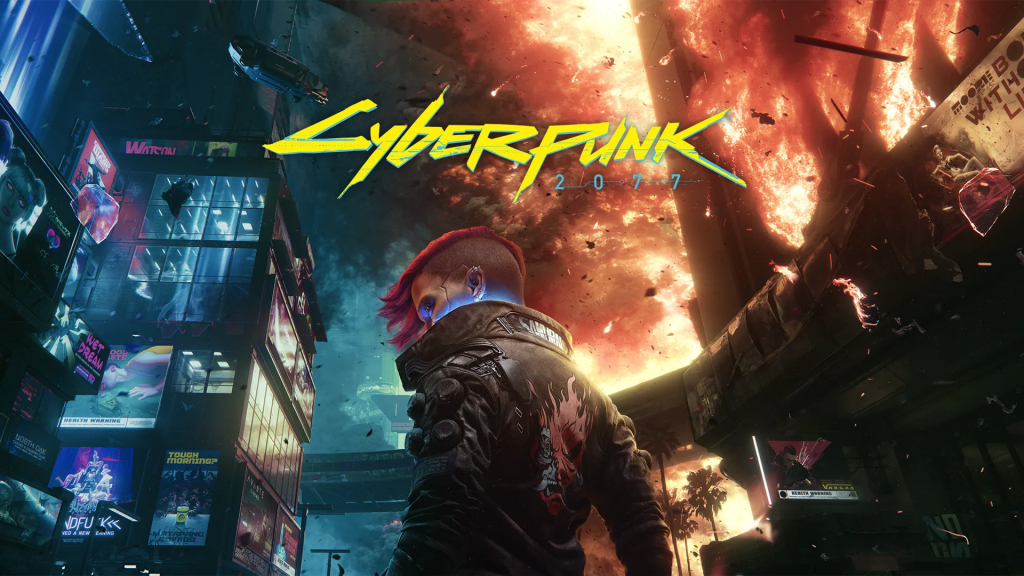
Remember when Cyberpunk 2077 launched back in 2020? The bugs, the crashes, the missing limbs, and those horrifying T-posed NPCs haunting the streets of Night City like digital ghosts? Well, chooms, it’s 2025, and CD Projekt Red has pulled off what might be gaming’s greatest comeback since No Man’s Sky. With the Phantom Liberty expansion now fully integrated and years of patches behind it, Cyberpunk 2077 has finally become the game we were promised.
The transformation is nothing short of miraculous. Night City now stands as one of gaming’s most realized open worlds – a neon-soaked, corporate-controlled hellscape that feels genuinely alive. The density of detail is staggering, from the mega-buildings that blot out the sun to the grimy alleyways where gangs conduct their… business?
The Story That Was Always There
Beneath the technical issues that plagued its launch, Cyberpunk 2077 always had a compelling narrative, and now it can finally shine without distraction. V’s journey through Night City, accompanied by the digital ghost of Johnny Silverhand (still brilliantly performed by Keanu Reeves), remains one of gaming’s most emotionally resonant stories.
What elevates the experience to new heights is how seamlessly Phantom Liberty integrates with the base game. The spy-thriller plot featuring Solomon Reed (portrayed by Idris Elba, at his best) doesn’t feel tacked on or disconnected from the main storyline. Instead, it enriches the world and provides new context for V’s struggle against the ticking time bomb in his/her head.

Systems That Finally Work
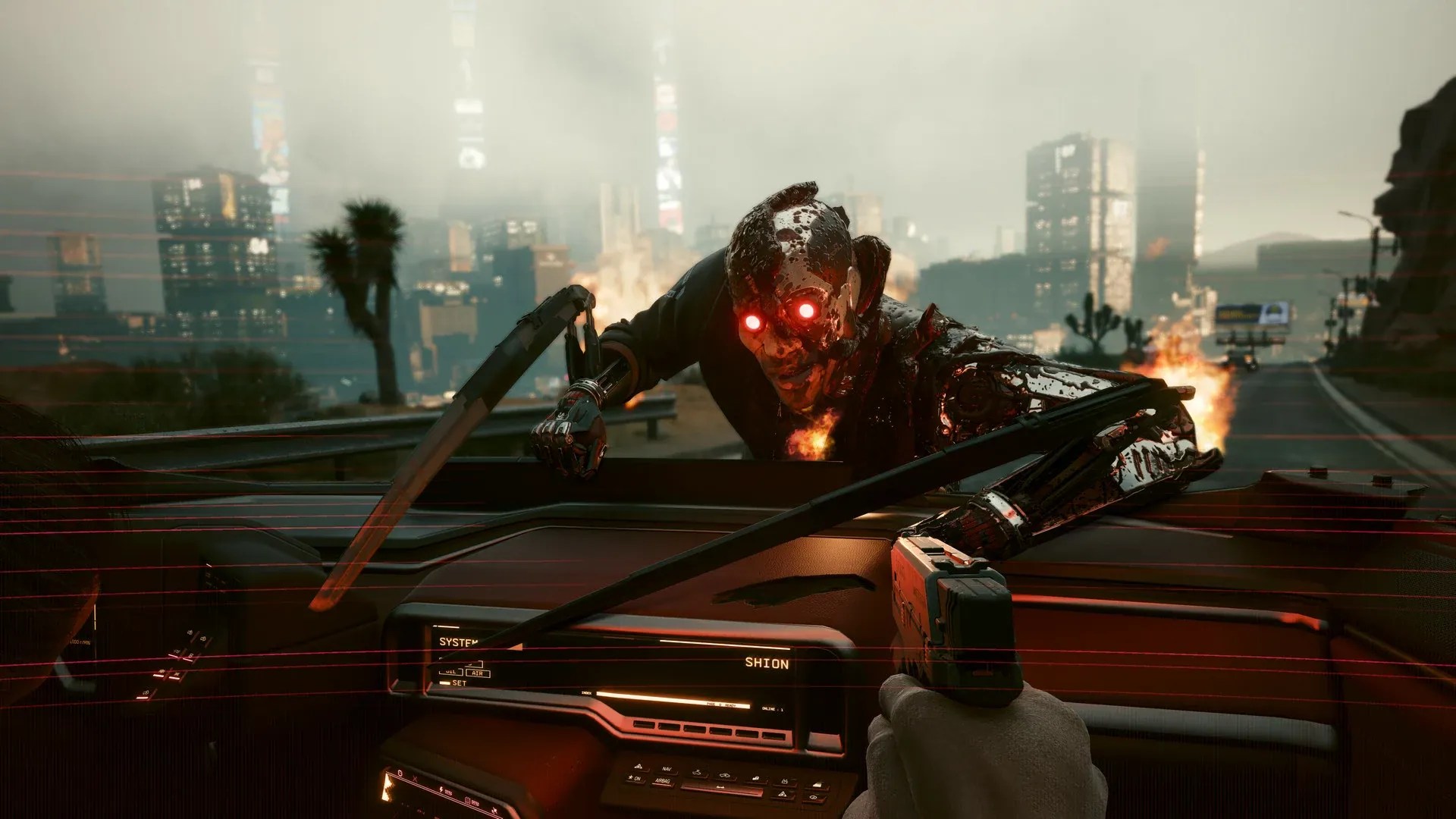
Combat has been completely overhauled since launch, with each playstyle feeling distinct and rewarding. Netrunning now delivers the power fantasy of a digital god, letting you crash through security systems and turn enemies’ implants against them. Gunplay feels weighty and impactful, while melee combat has been refined to make even a simple katana run feel like a ballet of violence.
The RPG systems have also been fine-tuned to provide meaningful progression. Perks actually change how you play rather than just offering percentage-based improvements, and the cyberware options let you truly customize your playstyle to an impressive degree.
A Technical Marvel (Finally)
Perhaps the most impressive aspect of Cyberpunk’s redemption is technical. On current hardware, the game runs like a dream, maintaining solid framerates even during the most chaotic firefights. The ray tracing implementation creates moments of breathtaking beauty as neon signs reflect in rain-slicked streets, and the crowd density makes Night City feel appropriately claustrophobic.
Gone are the days of cars falling from the sky and NPCs morphing through solid objects. The AI has been completely revamped, making both combat and civilian behavior more believable. Police actually pursue you through the city rather than magically appearing behind you, and drivers react to your vehicular mayhem in believable ways. 🚔
The Verdict
If you wrote off Cyberpunk 2077 after its slightly off-putting launch, it’s time to jack back in. This is the definitive cyberpunk experience, a game that finally delivers on its enormous potential. Night City has been transformed from a beautiful but hollow shell into one of gaming’s most immersive worlds.
The combination of compelling narrative, refined gameplay systems, and technical excellence makes this not just a good game, but a genuine masterpiece. CD Projekt Red didn’t just fix Cyberpunk 2077 – they elevated it to something truly special.
Sign up to our newsletter – get notified any time there’s a new post, review or article that may pique your interest.
Some links included in this post are affiliate links. These help to fund and sustain everything we do, at no extra cost to you. Learn more about affiliate links here.


 12Boom
Leave a comment